
Precious Metal Insight
Get in Touch With Us
You Can Do This
Including precious metals in your investment portfolio can provide diversification, act as a hedge against market volatility, and preserve wealth over time. Gold, silver, platinum, and palladium each offer unique investment opportunities based on their properties and industrial demand.
Consider your risk tolerance, investment goals, and market trends when determining the appropriate
allocation of precious metals in your portfolio.
Ensure secure storage and consider insurance options to protect your valuable holdings.
By incorporating precious metals into your investment strategy, you can add stability, potential growth, and long-term value preservation.

Read Our Latest Thoughts
Lorem ipsum dolor sit amet, consectetur adipiscing elit.
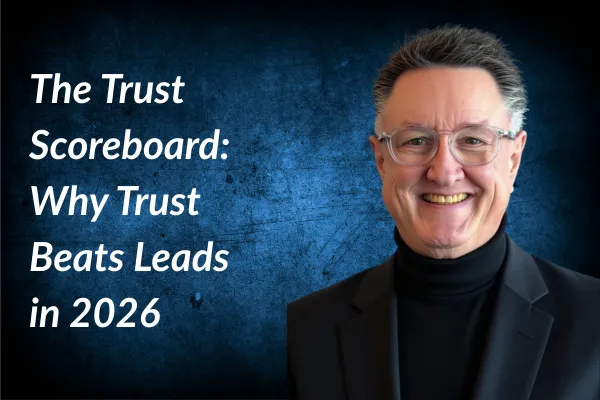
The Trust Scoreboard: What We Learned in 2025
You don’t need more leads. You need more trust.
Let me say this plain.
Most businesses don’t have a lead problem.
They have a trust problem.
In 2025, we watched thousands of clicks, calls, forms, and conversations across service businesses just like yours. HVAC. Insurance. Solar. Trades. Local pros. Owners who work hard and still feel stuck.
The pattern was clear.
The companies winning didn’t have louder ads.
They didn’t have more tech.
They didn’t even have better offers most of the time.
They had more trust.
Think of trust like a scoreboard.
Every interaction adds points—or subtracts them.
In 2025, five signals moved that scoreboard more than anything else.
Not theory.
Not hype.
Real-world results.
Here’s what we learned.
1. Proof Beats Promises. Every Time.
This one isn’t new. But it hit harder than ever this year.
People don’t believe what you say about yourself.
They believe what others say about you.
Claims don’t convert.
Proof does.
We saw it over and over.
Websites that swapped “We’re the best” for:
Real customer stories
Before-and-after results
Screenshots of reviews
Short video testimonials
…outperformed slick copy every single time.
And here’s the key shift in 2025.
People didn’t want polished testimonials.
They wanted believable ones.
Messy videos.
Plain language.
Specific details.
Not “They were great.”
But “They showed up on Tuesday, fixed the problem in 40 minutes, and didn’t upsell me.”
Specific equals believable.
Believable equals trust.
If your site still talks more about you than your customers, the scoreboard isn’t moving in your favor.
2. Clarity Reduced Fear Faster Than Discounts
This surprised a lot of owners.
They assumed price was the issue.
It wasn’t.
Confusion was.
In 2025, clarity beat discounts in head-to-head tests.
Clear offers.
Clear next steps.
Clear expectations.
When people knew:
What happens next
How long it takes
What it costs
What could go wrong
They moved.
When they didn’t?
They stalled. Or disappeared.
Trust grows when people feel oriented.
If someone lands on your site and has to figure you out, trust leaks out the door.
The highest-performing pages we saw did one thing well:
They removed guesswork.
No clever wording.
No marketing gymnastics.
Just plain talk.
“This is who this is for.”
“This is how it works.”
“This is what it costs.”
“This is what happens next.”
Clarity isn’t boring.
Confusion is expensive.
3. Speed Sent the Loudest Signal of All
Speed was the silent killer—or hero—of 2025.
Here’s the truth most businesses don’t want to hear.
Slow response feels like indifference.
It doesn’t matter if that’s fair.
It’s how people interpret it.
In our data, the difference between:
Responding in under 5 minutes
Responding in under 24 hours
Was massive.
Same lead.
Same offer.
Different outcome.
Fast replies said:
“We’re on it.”
“You matter.”
“We’re professional.”
Slow replies said:
“We’re busy.”
“Maybe later.”
“Someone else will probably call you back first.”
Trust is emotional.
Speed reassures emotion.
And no, this doesn’t mean you need to be glued to your phone.
It means your systems need to be faster than your competitors.
In 2025, speed wasn’t a bonus.
It was the price of admission.
4. Consistency Beat Brilliance
This one hurt some feelings.
The businesses that posted less flashy content—but did it every week—won.
The ones who:
Published regularly
Showed up with the same message
Repeated their core ideas
Built more trust than the ones chasing viral hits.
Why?
Because consistency feels stable.
And stable feels safe.
People trust what feels familiar.
If your message changes every month…
If your tone shifts every post…
If your offer keeps morphing…
You may think you’re being creative.
Your audience feels uncertainty.
The winners in 2025 didn’t try to impress.
They tried to reinforce.
Same core promise.
Same positioning.
Same voice.
Over and over.
Trust isn’t built in one post.
It’s built in repetition.
5. Reputation Became the First Filter
This was the biggest shift of the year.
Before people:
Filled out a form
Booked a call
Clicked “Buy”
They checked your reputation.
Reviews.
Search results.
Social proof.
Mentions.
And they did it quietly.
No notification.
No warning.
They decided before you ever heard from them.
We saw businesses with strong offers lose to weaker competitors with better reputations.
Why?
Because reputation answers the unspoken question:
“Am I safe here?”
If your online presence feels thin…
If reviews are outdated…
If Google doesn’t trust you…
Neither will people.
In 2025, reputation wasn’t branding.
It was risk management.
What This Means Going Into 2026
Here’s the hard truth.
More leads won’t fix a trust leak.
You’ll just waste more money faster.
Before you buy ads.
Before you build funnels.
Before you chase the next tactic.
Check your scoreboard.
Ask yourself:
Do we show proof, or just talk?
Is our message clear, or clever?
Are we fast, or reactive?
Are we consistent, or scattered?
Does our reputation work for us, or against us?
Trust compounds.
Distrust does too.
The businesses that grew in 2025 didn’t shout louder.
They made it easier to believe them.
And that’s the game going forward.
You don’t need more leads.
You need more trust.
Fix that—and the leads follow.

(678) 922-4561


